Full AOSP architecture
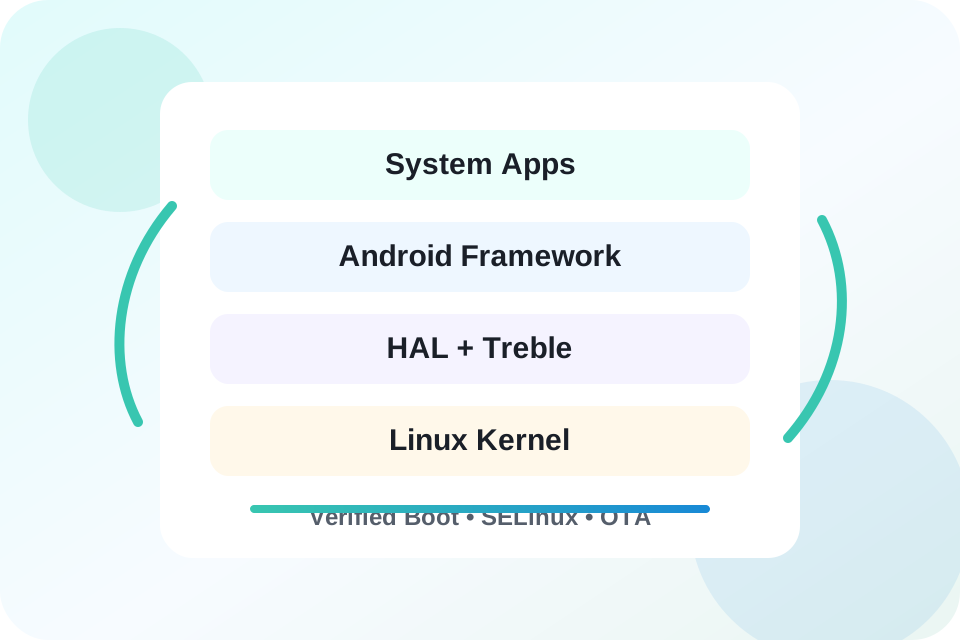
Custom ROM architecture
Mapping AOSP, kernel, HAL, framework, and system-app layers for maintainable long-term Custom ROM delivery.
iGates is a Tel Aviv-based software house with over 15 years of specialization in Android Internals and Custom ROM development. We work at the operating-system level — kernel customization, HAL development, AOSP framework modifications, SELinux policy hardening, and OTA infrastructure — for cybersecurity platforms, industrial devices, OEM products, and defense-grade systems. Flagship reference: iGates was the R&D partner behind the Consensio Cyber Security platform.
Android Internals is the discipline of working at the operating-system level of Android — as opposed to developing an application that runs on top of it. Instead of using the Android SDK to write Kotlin running above the framework, an Android Internals engineer writes the framework itself, the HAL for dedicated hardware, customizes the kernel, defines custom SELinux policy, and delivers a complete AOSP build optimized for the hardware and product needs.
This is a rare discipline. In Israel, only a small number of companies can take a project like this from feasibility through shipped product with long-term security-update maintenance. iGates is one of them.
Languages: C, C++ (11/17/20), Java, Kotlin, Assembly (ARM, x86)
AOSP versions: Android 14, 15, 16, and LTS branches
Kernel: Linux mainline + Android patches, binder, ashmem, low memory killer, and wakelocks
HAL: AIDL, legacy HIDL, and Treble-compliant design
SELinux: targeted policy, mac_permissions.xml, and policy compilation pipeline
Bootloader: U-Boot, Little Kernel, EDK2 / Tianocore for ARM
SoCs: Qualcomm Snapdragon, MediaTek, Samsung Exynos, NXP i.MX, and Rockchip
Security: OP-TEE, Verified Boot, AVB, and hardware-backed keystore
Consensio Cyber Security — Security platform on custom AOSP. iGates was the R&D partner behind Consensio's solution: deep Android Internals integration, custom kernel work, defense-grade SELinux hardening, and framework modifications inside a complete security product.
Additional industrial and defense projects — embedded and cyber work we are not free to discuss publicly due to classification, NDA, or client policy. We can discuss them under NDA in an initial conversation.
Planning a platform that sits inside Android rather than on top of it — a cybersecurity product, industrial device, secure enterprise platform, or OEM customization? The first step is a 3-4 week feasibility study that tells you exactly what is possible, at what cost, and on what timeline. Reach out for a no-commitment technical review.
For a deeper read, see our article: Android Internals & Custom ROM. Related services include Embedded Linux and kernel development, Android application development, Industrial IoT development, Software development, and iGates services.
Custom ROM architecture
Mapping AOSP, kernel, HAL, framework, and system-app layers for maintainable long-term Custom ROM delivery.
HAL and hardware bring-up
HAL development, driver adaptation, and hardware bring-up for dedicated devices, including Treble-compliant partitioning and Device Tree.
Defense-grade hardening
SELinux policy engineering, Verified Boot, signed OTA updates, and long-term security-update maintenance.
We work on Android-based cybersecurity platforms, industrial devices with kiosk-mode requirements, OEM customizations, defense systems with classification requirements, and medical or financial devices with compliance needs. The basic criterion: the product must intervene inside the operating system, not just use it.
We are a software company, not a hardware manufacturer. But we have deep experience with common SoCs such as Qualcomm Snapdragon, MediaTek, Samsung Exynos, NXP i.MX, and Rockchip, and we help clients select appropriate hardware during feasibility.
A POC on existing reference hardware usually takes 3-4 months. A production-grade ROM with OTA, signed builds, and full security hardening takes 8-14 months. A full security platform with defense-grade hardening and multi-year support can take 18+ months.
Yes. We track Google's monthly Android Security Bulletins, stay current on kernel CVEs, perform merges with vendor BSPs, and build pipelines that produce signed OTA updates. A ROM without a maintenance process ages within months.
We work with Android 14, 15, and 16. For projects requiring long-term support, we recommend LTS branches. For legacy projects already running on older versions, we also help with structured upgrade paths.
Yes. Android Internals projects often touch sensitive information — IP, hardware roadmaps, and security architecture. We are accustomed to signing NDAs before an introductory call, including mutual NDAs when required.