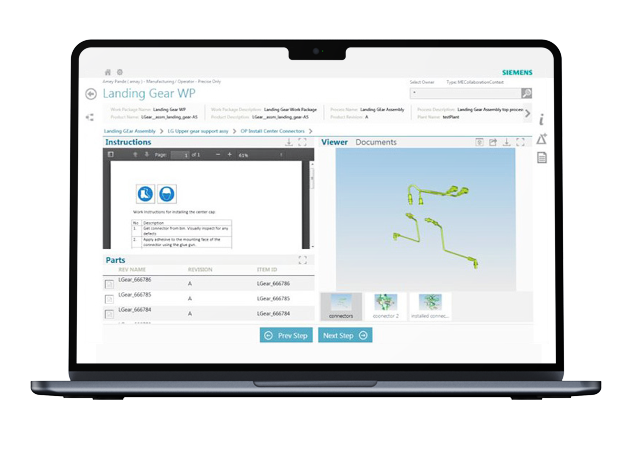
iGates is a software house that builds web platforms — corporate sites, SaaS products, management dashboards, customer portals, and complex enterprise web systems — for organizations that need engineering depth, not template assembly. Our web work runs on React, Next.js, Angular, and Vue on the frontend, with secure backends in Node.js, Python, Java, .NET, and Go. Reference accounts include Shufersal (retail platform), LivePerson (enterprise messaging), and Siemens (industrial dashboard work).
Our web-development practice covers:
- Corporate sites and content platforms — fast, SEO-ready, accessibility-compliant
- SaaS web applications — multi-tenant, role-based, payment-integrated
- Management dashboards — real-time data, fleet operations, observability
- Customer portals — secure authentication, account management, self-service
- Enterprise integrations — connecting web frontends to ERP, CRM, mainframe, legacy systems
- Headless commerce and content — modern frontends over established backends
- Performance and Core Web Vitals — LCP, INP, and CLS as engineering targets
- Web security — OWASP Top 10 enforcement, secure SDLC, dependency scanning
- DevOps for web — CI/CD pipelines, infrastructure-as-code, observability stacks
Our web engagements typically start with mapping the integration surface — the existing backends, the identity provider, the data sources, and the operational handoffs. For greenfield builds, we recommend Next.js with server-side rendering as the default for SEO-sensitive content, and React or similar SPAs for application-style interfaces. We treat Core Web Vitals as an engineering specification, not a marketing claim — every shipped page is benchmarked before launch and monitored after.
Our web work spans retail (Shufersal), enterprise communications (LivePerson), industrial systems (Siemens), telecommunications, financial services, and public-sector platforms. We work with organizations that need real engineering — secure authentication flows, multi-tenant data isolation, integration with legacy systems, and operational reliability — rather than off-the-shelf templates.